You dust the furniture on Saturday.
By Tuesday, you can write your name on the TV stand again.
At some point, you start wondering whether your house is producing dust as a side business.
It isn’t. Probably.
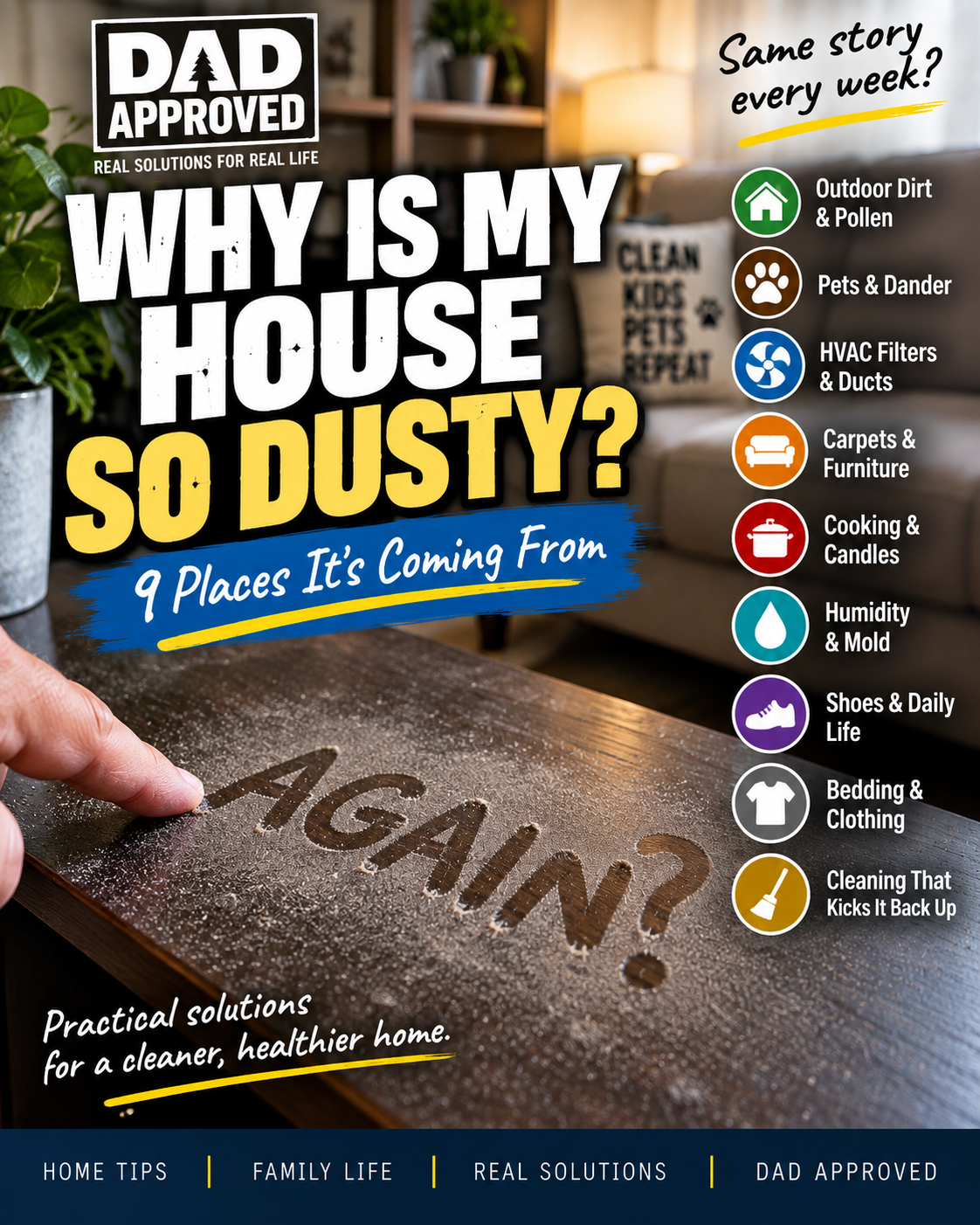
Household dust is a mixture of a lot of things: outdoor dirt and pollen, pet dander, human skin and hair, mold spores, dust mites, particles from cooking and cleaning, and even particles created by burning candles.
If your house seems way dustier than it should be, though, there are some places worth checking.
1. You’re Bringing Dirt Into the House
Some of the dust in your house started outside.
Every time a door opens, outdoor particles have another opportunity to come inside. Then there are shoes, kids, dogs, backpacks, packages and everything else crossing the floor.
Nobody wipes their feet as thoroughly as they claim.
What helps: Use decent entrance mats, take shoes off near the door if that works for your family, and vacuum high-traffic areas regularly.
You aren’t going to establish an airlock at the front door. The goal is simply to stop some of the outdoors from becoming part of the indoors.
2. Pets Are Tiny Dust Factories
I say this as someone living in a house with pets.
They’re adorable.
They’re also contributing to the problem.
Pet dander and hair become part of the material collecting around your home. And unlike a dusty bookshelf, pets move. They’re constantly helping redistribute whatever has settled onto floors and furniture.
What helps: Vacuum carpets and upholstered furniture regularly, wash pet bedding, clean the areas where pets spend the most time and keep up with grooming.
If you have several animals, you’re simply going to have a higher dust workload than somebody living alone with a goldfish.
That’s the deal we apparently signed.
3. Your HVAC Filter or Ductwork May Be Part of the Problem
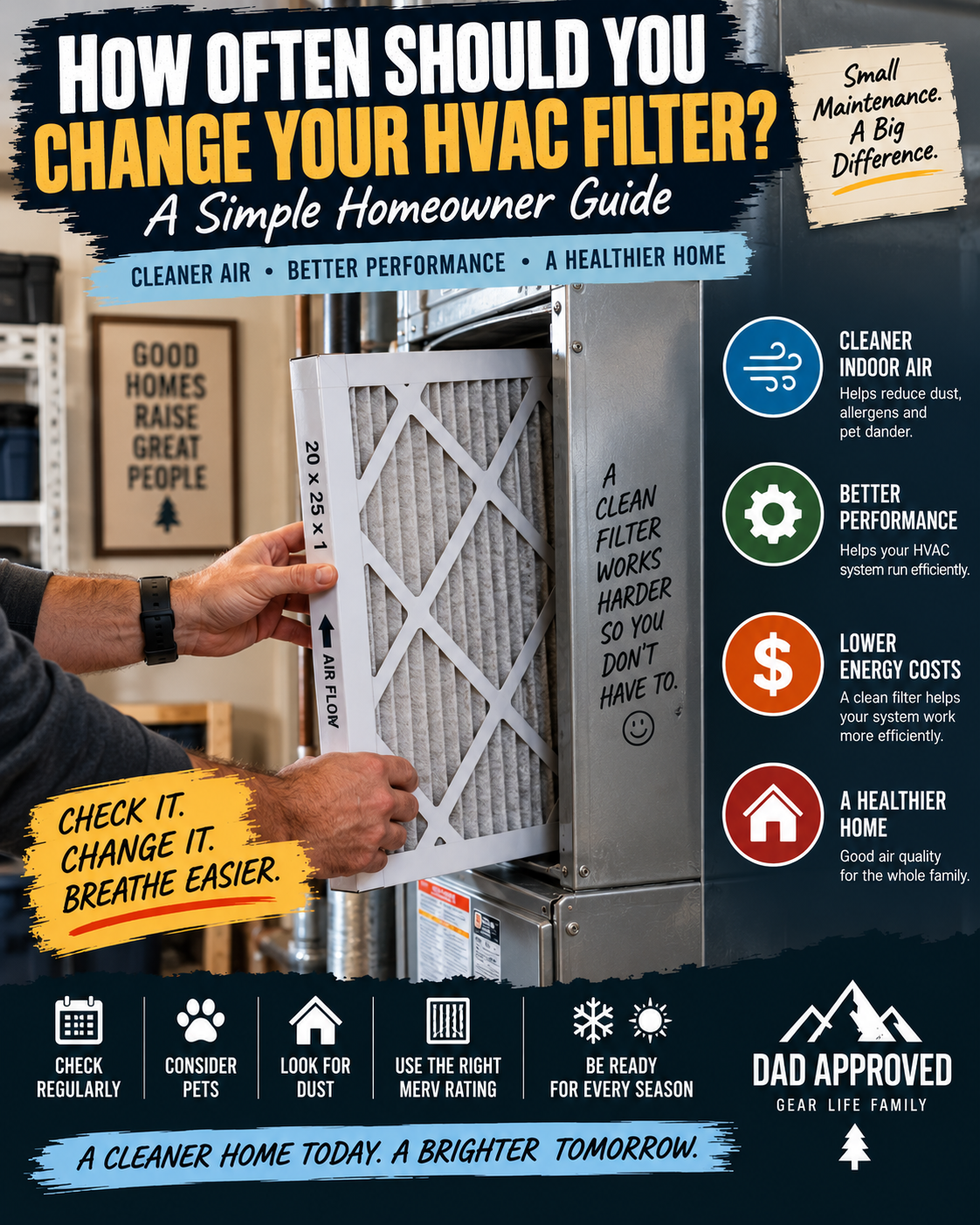
Your HVAC system moves a lot of air through your house, so it’s worth checking when dust seems excessive.
Start with the obvious: the filter.
A dirty, poorly fitted or inadequate filter can allow more particles to keep circulating. Your filter’s MERV rating matters too. MERV stands for Minimum Efficiency Reporting Value, and higher ratings generally capture smaller particles more effectively.
But the filter isn’t the only potential issue.
Leaky Ductwork Can Pull Dust From Places You Don’t Want It
If your duct system has leaks, particularly on the return side, it can pull unfiltered air from spaces such as an attic, crawlspace, basement, garage or wall cavity and introduce those particles into the HVAC system.
That can mean you’re cleaning the house while the HVAC system keeps helping bring more dust into circulation.
The U.S. Department of Energy notes that sealing duct leaks can improve indoor air quality by reducing the chance of ducts drawing in contaminants from areas such as attics, crawlspaces and garages.
Signs worth investigating include:
- One room becoming noticeably dustier than others
- Dust collecting unusually quickly around supply registers
- Visible gaps or disconnected ductwork
- Return-air leaks
- Ducts running through dusty unfinished spaces
- Filters becoming dirty unusually quickly
Don’t assume dusty registers automatically mean you need professional duct cleaning, either. The problem may be air leakage, not dirty duct interiors.
4. Don’t Automatically Buy the Highest-MERV Filter on the Shelf
The internet version of HVAC advice sometimes boils down to:
More MERV = more better.
Not quite.
Your system still has to move air through the filter. The EPA recommends using the highest-rated filter that your system’s fan and filter slot can accommodate. (US EPA)
There’s also something much simpler worth checking:
Does the filter actually fit?
A good filter won’t accomplish nearly as much if air can bypass it around the edges.
Make sure you’re buying the correct dimensions and that the filter sits properly in its slot.
If you’re considering a major jump in filter efficiency and aren’t sure what your equipment can handle, check the HVAC manufacturer’s recommendations or ask an HVAC technician.
5. Your Vacuum May Be Putting Some Dust Back Into the Air
Vacuuming removes dust.
It also disturbs it.
Walking, sweeping, dusting and vacuuming can kick settled particles back into the air. The EPA recommends frequent cleaning and suggests damp-dusting surfaces so you’re actually capturing settled dust instead of launching it back into circulation.
A vacuum with good filtration can help too.
And don’t attack a dusty room with a feather duster unless your goal is relocating the dust six feet to the left.
6. Your Carpet, Furniture and Bedding Are Holding Onto It
Soft surfaces are excellent dust storage facilities.
Carpets, rugs, couches, mattresses, curtains and bedding collect particles over time. Then people, pets and normal household activity disturb them again.
Vacuum carpets and upholstered furniture regularly. Wash bedding and pet bedding. Don’t forget the areas that aren’t obvious, like underneath beds and furniture.
Bedrooms can be surprisingly dusty because they’re packed with fabric, clothing, pillows and blankets.
Plus there’s a human being spending roughly eight hours every night shedding skin and hair into the room.
Very relaxing thought.
You’re welcome.
7. Cooking and Candles Create Particles Too
Not everything you call “dust” arrived as dirt.
Some particles are created inside the house.
Cooking, burning candles, fireplaces and certain cleaning activities can all contribute to indoor particulate matter.
This doesn’t mean you have to declare war on dinner or throw every candle into the yard.
It just means your house isn’t a sealed container. Everyday life continuously adds particles to the indoor environment.
Using a range hood that vents outdoors while cooking can help reduce cooking-related particles.
8. Humidity and Moisture Can Add to the Problem
Humidity doesn’t magically manufacture ordinary household dust, but excessive moisture can encourage things you definitely don’t want becoming part of it.
Most notably: mold and dust mites.
If your house regularly feels damp, you’re seeing condensation, or you have musty areas, investigate the moisture problem rather than treating it as a cleaning problem.
Bathroom exhaust fans, kitchen ventilation, fixing water leaks and using a dehumidifier where appropriate can all help control excess moisture.
9. Your House May Simply Produce a Lot of Dust
This one gets overlooked.
Compare these two houses:
House A: Two adults, no pets, mostly hard flooring.
House B: Six people, dogs, cats, carpet, kids running upstairs, doors opening constantly, cooking every day and enough laundry to qualify as light industrial activity.
Those houses aren’t going to accumulate dust at the same rate.
More people and animals mean more hair, skin particles, fibers and tracked-in dirt. More activity also means more settled material getting kicked back into the air.
Sometimes the answer isn’t that something is broken.
Your house is just busy.
What I’d Check First
If my house were getting dusty ridiculously fast, I wouldn’t immediately pay for duct cleaning or start buying miracle gadgets.
I’d start with the boring stuff:
- Check the HVAC filter. Make sure it’s clean, properly fitted and appropriate for the system.
- Vacuum carpets and upholstered furniture regularly.
- Damp-dust surfaces instead of simply pushing particles around.
- Wash bedding and pet bedding regularly.
- Reduce the dirt being tracked inside.
- Check for excessive indoor humidity or moisture problems.
- Pay attention to where the dust is worst. If one room gets dramatically dustier than the rest of the house, investigate what’s different about that room.
Only after doing those things would I start spending money trying to solve the problem.
What About an Air Purifier?
A portable air cleaner can help capture particles that are actually airborne, particularly when it’s properly sized for the room.
If you’re shopping for one, you’ll commonly see HEPA filtration advertised.
A true HEPA filter is designed to capture at least 99.97% of airborne particles at 0.3 microns, with larger and smaller particles captured at even greater efficiency. (US EPA)
That’s impressive, but an air purifier still isn’t a magic dust eraser.
It can’t vacuum your carpet.
It can’t wash the dog bed.
It can’t stop dirt from coming through the front door.
And it can’t capture dust that’s already sitting underneath your couch plotting its return.
Think of filtration as another tool, not a replacement for controlling the sources of the dust.
The Dad Approved Bottom Line
If your house gets dusty fast, buying a stronger HVAC filter or expensive air purifier isn’t automatically the answer.
Dust is coming from outside, your family, your pets, fabrics, cooking, cleaning and normal life inside the house.
Start by reducing what gets tracked or generated inside. Then make sure your HVAC filter fits properly and is appropriate for your system. Clean the places where dust collects, and use additional air filtration where it actually makes sense.
And if you clean on Saturday and find dust again on Tuesday?
Congratulations.
You still live in a house.