This post contains affiliate links. As an Amazon Associate, I earn from qualifying purchases at no extra cost to you.
If you have pets, you already know the deal. You vacuum the floor, admire your work for approximately six minutes, and then your dog walks through the room and somehow leaves enough hair behind to build a smaller dog.
Finding the best cordless vacuum for pet hair isn’t just about buying the model with the biggest suction number on the box. Pet owners also need to think about hair wrapping around the brush roll, filtration, furniture attachments, battery life, weight, and whether the vacuum is actually convenient enough to grab every day.
I narrowed the field down to four strong choices at very different price points. These are research-based recommendations, not products I’ve personally tested, so I’ve separated what each model does well from the marketing noise.
Quick Comparison
| Pick | Vacuum | Best For |
|---|---|---|
| 🏆 Best Overall | Dyson V15 Detect Plus | Performance & heavy shedding |
| 💰 Best Mid-Range | Shark PowerPro Flex Reveal Plus | Features without Dyson pricing |
| 🐾 Best Value | BISSELL PowerClean FurFinder | Pet-focused cleaning |
| 💵 Best Budget | LEVOIT LVAC-200 | Everyday pet hair on a budget |
1. Best Overall: Dyson V15 Detect Plus
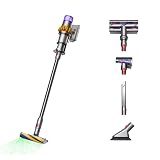
- 2 Advanced cleaner heads and 4 attachments to clean up high, down low, and everywhere in between. Plus wall dock and charger.

Check the Dyson V15 Detect Plus on Amazon
If budget isn’t the deciding factor, the Dyson V15 Detect Plus is the strongest overall choice of these four.
The V15 combines powerful cordless cleaning with features that are genuinely useful in a house with pets. Dyson rates it at 240 air watts of suction with up to 60 minutes of runtime, although actual runtime varies depending on the cleaning mode and attachments being used.
One of its biggest advantages for pet owners is the included Hair Screw tool, which is specifically designed to pick up long hair and pet hair while reducing tangling. That’s particularly useful for couches, stairs, pet beds and other places where fur likes to establish permanent residency.
The Fluffy Optic cleaner head also illuminates microscopic dust on hard floors. That’s probably going to reveal some things about your supposedly clean kitchen that you weren’t emotionally prepared to know.
Why I picked it
- Excellent pet-hair performance
- Powerful 240 AW suction
- Up to 60 minutes runtime
- Hair Screw tool for upholstery and pet hair
- Two cleaner heads
- Whole-machine filtration
- Useful on both hard flooring and carpet
The downside
It’s expensive.
You’re paying premium money for premium performance, and plenty of households simply don’t need to spend this much on a cordless vacuum.
Dad Approved verdict:
If you have multiple shedding pets, mixed flooring and want one of the strongest cordless options available, this is the one I’d put at the top of the list.
2. Best Mid-Range: Shark PowerPro Flex Reveal Plus

- HYPERVELOCITY SUCTION: Provides incredible suction power and cleaning performance for everyday messes.
- DIRT-REVEAL TECHNOLOGY: Illuminates the hidden dust & dirt to ensure no spot is missed.
- EASILY REACH UNDER FURNITURE: MultiFLEX technology allows you to bend the wand to clean under furniture, or fold it over for compact, flex storage.
- FLOORDETECT TECHNOLOGY: Detects floor type and automatically adjusts brushroll speed for maximized performance on all surfaces – no switching of nozzles required.
- NO HAIR WRAP: Self-cleaning brushroll for powerful pet hair pickup with no hair wrap.
Model: IZ382H
Check the Shark PowerPro Flex Reveal Plus on Amazon
The Shark PowerPro Flex Reveal Plus lands in an interesting spot between budget cordless vacuums and Dyson territory.
Its biggest attraction for a pet household is Shark’s self-cleaning brush-roll technology, designed to reduce hair wrapping around the roller.
It also includes HEPA filtration and Shark’s flexible wand design. The wand can bend so you can reach underneath beds, couches and furniture without performing the middle-aged-dad floor maneuver where getting down is easy but getting back up requires a written plan.
Runtime is rated at up to 50 minutes, depending on configuration and use.
Why I picked it
- Strong pet-hair pickup
- Self-cleaning brush roll
- HEPA filtration
- Flexible wand for cleaning under furniture
- Up to 50 minutes runtime
- More approachable price than the Dyson
The downside
You’re still spending considerably more than the budget models, and maximum runtime figures don’t represent continuous full-power cleaning.
Dad Approved verdict:
This is the sweet spot for someone who wants premium pet-friendly features without jumping all the way to Dyson pricing.
3. Best Value: BISSELL PowerClean FurFinder

- POWERFUL 280W SUCTION MOTOR. Find and capture pet hair everywhere with a high performance motor and FurFinder LED headlights that illuminate hidden pet hair fine dust and debris for a deep clean on every surface.
- EXTENDED 50 MINUTE CORDLESS RUNTIME. Enjoy up to 50 minutes of continuous cleaning power in low mode or 13 minutes in turbo mode. Easily transforms from a stick vacuum to a handheld or high reach vacuum for versatile home cleaning.
- SPECIALIZED PET HAIR REMOVAL TOOLS. Remove up to 95 percent of embedded pet hair from couches chairs stairs and auto interiors with the FurFinder tool. Engineered for quick and efficient hair pickup across your entire home.
- FURGUARD SELF CLEANING BRUSHROLL. Advanced brushroll technology prevents hair wrap and clogging from pet and human hair up to 16 inches long while powerfully vacuuming debris across carpets and sealed hard floors.
- SELF STANDING CONVENIENCE AND STORAGE. PowerClean can stand upright on its own for convenient pauses during cleaning or for compact storage while charging the long lasting removable lithium ion battery.
Check the BISSELL PowerClean FurFinder on Amazon
The name FurFinder isn’t exactly subtle about what BISSELL built this vacuum to do.
This is the most pet-focused option in the group and an especially interesting choice for households where fur on furniture is just as much of a problem as fur on the floor.
The PowerClean FurFinder uses FurFinder headlights to help reveal pet hair and debris that can be difficult to see under normal lighting. It also uses a tangle-resistant brush system and includes tools intended for cleaning pet hair from above-floor surfaces.
BISSELL rates cordless runtime at up to 40 minutes.
Why I picked it
- Designed specifically with pet households in mind
- FurFinder headlights expose hidden hair
- Tangle-resistant brush roll
- HEPA filtration
- Removable battery
- Up to 40 minutes runtime
- Strong balance between price and pet-specific features
The downside
The 40-minute maximum runtime trails the longer advertised runtimes of the Dyson, Shark and LEVOIT.
For most quick daily cleanups that’s unlikely to matter, but it could if you’re trying to vacuum a large house in one session.
Dad Approved verdict:
For the average pet-owning family, this may be the best balance of price and features in the entire comparison.
4. Best Budget: LEVOIT LVAC-200

- READY TO GO WHENEVER YOU ARE: Get up to 50 minutes of power with the Crevice or Pet Tool in Eco mode, 30 minutes with the vacuum head, and 12 minutes in Turbo mode. Note: Runtimes are based on testing at room temperature
- TACKLE URGENT MESSES FAST: Powerful suction handles unexpected cleaning tasks with ease, so you stay stress-free. Note: This vacuum is designed for dry messes only and should not be used to clean up wet spills or liquids
- LIGHTWEIGHT & FLEXIBLE FOR EVERYDAY USE: Easy top-to-bottom cleaning, lies 180° flat to reach under furniture, and includes 3 LED lights to spot dust as you go
- EFFORTLESS CLEANING FOR TRICKY SPOTS: The custom 2-in-1 pet tool simplifies cleaning up hair, and the dusting brush doubles as a crevice tool for hard-to-reach areas
- FINISH DAILY CLEANING TASKS FAST AND STRESS-FREE: No more wasting time untangling hair from the brush. Our anti-tangle brush is designed to help you clean quickly with less hassle
Check the LEVOIT LVAC-200 on Amazon
You don’t necessarily need a $500 cordless vacuum to keep tumbleweeds of dog hair from migrating through the hallway.
The LEVOIT LVAC-200 gives budget-conscious buyers several features that matter specifically for everyday pet cleanup.
Its roller is designed to resist hair tangling, the vacuum is relatively lightweight, and LEVOIT advertises up to 50 minutes of runtime under appropriate operating conditions.
The battery is also removable, which is a feature I like seeing on cordless equipment because the battery doesn’t have to permanently sentence the rest of the machine when it eventually wears out.
Why I picked it
- Lower-cost entry point
- Anti-tangle roller
- Lightweight design
- Removable battery
- Up to 50 minutes runtime
- Useful for quick everyday cleaning
- Strong option for hard floors and routine pet-hair pickup
The downside
This isn’t the model I’d choose over the Dyson for a large house with several heavy-shedding pets and lots of carpet.
That’s also not really the job it’s being asked to do.
Dad Approved verdict:
If your goal is simply a convenient cordless vacuum for everyday pet hair without spending premium-vacuum money, the LVAC-200 makes the most sense.
Which Cordless Pet Vacuum Should You Buy?
Here’s the simple version.
Buy the Dyson V15 Detect Plus if performance matters more than price and you’re dealing with serious shedding.
Buy the Shark PowerPro Flex Reveal Plus if you want strong performance, HEPA filtration and pet-friendly features without paying Dyson money.
Buy the BISSELL PowerClean FurFinder if you want the best combination of price and features specifically aimed at pet owners.
Buy the LEVOIT LVAC-200 if you want an affordable cordless vacuum primarily for everyday cleanup.
For a lot of families, I’d start by comparing the BISSELL and LEVOIT. They’re much easier purchases to justify if you mainly want something convenient for keeping up with daily fur.
What Actually Matters in a Cordless Vacuum for Pet Hair?
An Anti-Tangle Brush Roll
Hair wrapping around a brush roll is one of the quickest ways to turn vacuuming into vacuum maintenance.
If you have long-haired pets or people with long hair in the house, anti-tangle technology deserves more weight than another flashy feature you’ll use twice.
Upholstery Tools
Your pet apparently didn’t receive the memo that hair belongs exclusively on the floor.
A good upholstery or motorized hair tool matters for couches, stairs, vehicle interiors and pet beds.
Filtration
Vacuuming doesn’t help much if fine particles simply get blown back into the room.
A well-sealed filtration system becomes particularly useful in homes dealing with pets, dust and other airborne particles.
If your house seems to become dusty five minutes after cleaning it, I also put together a guide to why your house gets so dusty and what you can actually do about it.
Why Is My House So Dusty? 9 Places All That Dust Is Coming From
Battery Life
Don’t compare cordless vacuums based solely on the largest runtime number printed on the listing.
Maximum runtime is generally achieved under specific operating conditions. Higher-powered modes and motorized attachments can reduce it substantially.
For everyday pet cleanup, convenience may matter more than having the longest theoretical runtime.
Weight
A vacuum can have incredible specifications and still spend most of its life in a closet because nobody wants to drag it out.
That’s one of the biggest advantages of cordless models: they’re useful for the ten-minute cleanup that you probably wouldn’t bother doing with a full-size corded vacuum.
FAQ
What is the best cordless vacuum for pet hair?
Of the four models compared here, the Dyson V15 Detect Plus is my overall performance pick. For buyers looking for a better balance between price and pet-specific features, the BISSELL PowerClean FurFinder deserves serious consideration.
What is the best affordable cordless vacuum for pet hair?
The LEVOIT LVAC-200 is my budget pick. It combines an anti-tangle roller, removable battery and lightweight cordless design without moving into premium-vacuum pricing.
Are cordless vacuums good for dog hair?
Yes, particularly for frequent cleanup. Their biggest advantage is convenience. A cordless vacuum that’s easy to grab can make it much easier to stay ahead of daily shedding instead of waiting until enough fur accumulates to require an archaeological excavation.
Do I need a HEPA vacuum for pet hair?
HEPA filtration isn’t required simply to pick up visible pet hair, but good filtration can be valuable when you’re also concerned about fine dust and other small airborne particles.
Final Dad Approved Pick
If money weren’t part of the equation, I’d choose the Dyson V15 Detect Plus.
For most families spending their own money, however, I’d look very closely at the BISSELL PowerClean FurFinder first. It targets the actual annoyances pet owners deal with while staying well below premium Dyson territory.
And if you just need something affordable to chase fur around the house every day, the LEVOIT LVAC-200 is where I’d start.
Sometimes the best vacuum isn’t the one with the craziest specifications.
It’s the one you’ll actually grab when you notice the dog has apparently exploded again.