A fall home maintenance checklist can save you from discovering problems at the absolute worst possible time.
Nobody wants to find out the heat doesn’t work during the first cold night, discover a clogged gutter during a downpour, or remember the garden hose is still attached after temperatures drop below freezing.
Fortunately, preparing your house for winter doesn’t require spending every weekend on a ladder.
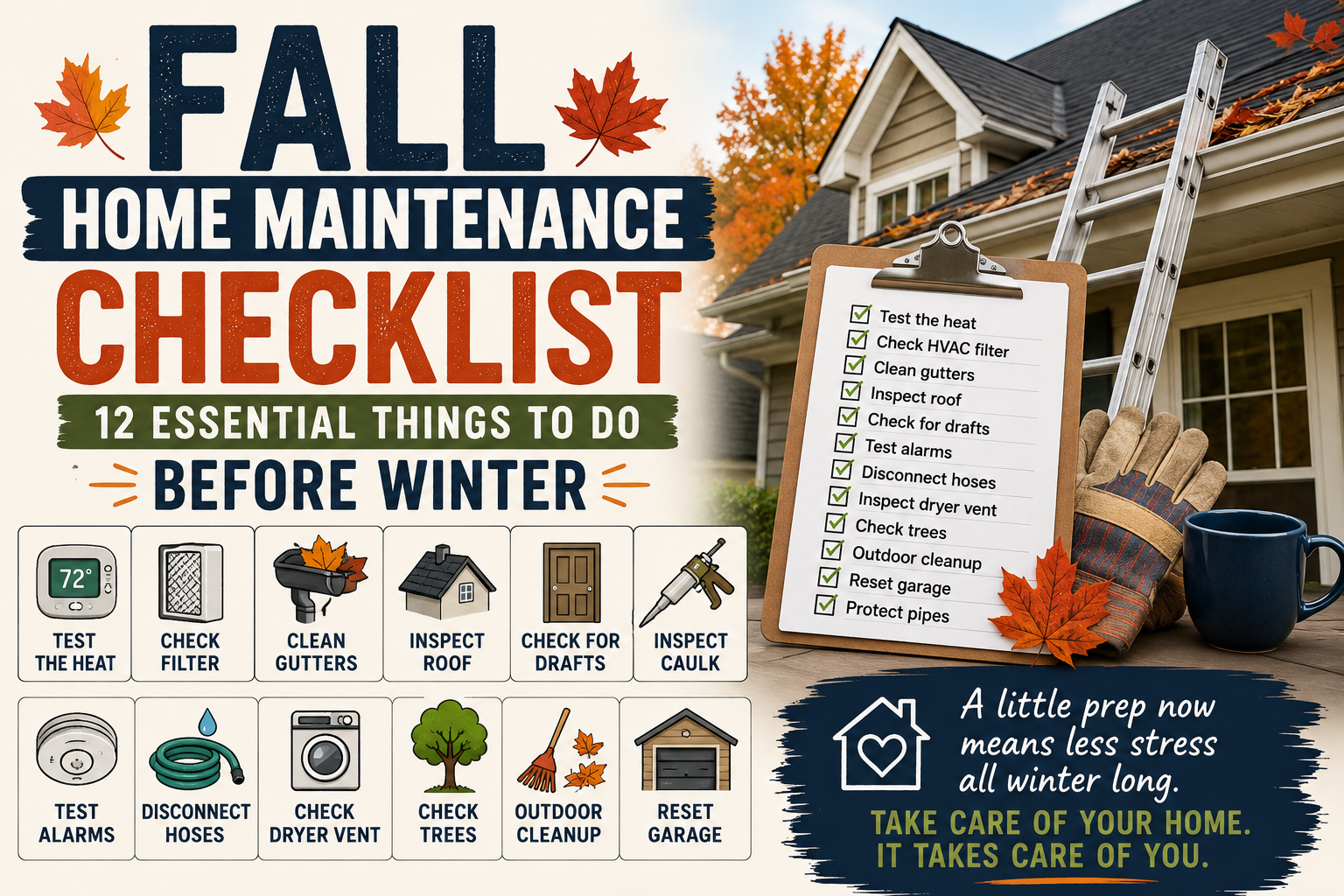
This fall home maintenance checklist covers 12 practical jobs worth handling before cold weather arrives. Knock them out over a couple of afternoons, and both your house and Future You should be in much better shape.
Fall Home Maintenance Checklist
- Test your heating system
- Check the HVAC filter
- Clean gutters and downspouts
- Inspect the roof
- Check windows and doors for drafts
- Inspect exterior caulk and gaps
- Test smoke and carbon monoxide alarms
- Disconnect garden hoses
- Inspect the dryer vent
- Check trees and branches
- Finish outdoor cleanup
- Reset the garage for winter
You don’t necessarily need to tackle them in that order. Start with whatever doesn’t require finding the ladder you buried behind six months of garage clutter.
🔥 1. Test Your Heat Before You Actually Need It
Don’t wait for the first freezing night to discover that your heating system has decided to retire.
Turn the heat on while the weather is still mild. Make sure the system starts normally, produces heat and seems to be operating as expected.
Pay attention to persistent unusual smells, strange noises, frequent cycling or rooms that aren’t warming normally.
Fall is also a sensible time to have heating equipment professionally inspected or serviced when needed. ENERGY STAR recommends pre-season heating-system checkups in the fall, before the heating season is fully underway.
The goal is simple:
Find the problem while wearing a T-shirt, not while your family is wrapped in blankets watching you negotiate with the thermostat.
🌬️ 2. Check the HVAC Filter

While you’re dealing with the heating system, check its filter.
If it’s dirty, replace or clean it according to the manufacturer’s instructions. ENERGY STAR recommends checking filters regularly and changing them when they’re dirty rather than assuming one replacement schedule works for every household.
While you’re there, make sure registers and returns aren’t blocked by furniture, rugs, boxes or whatever migrated in front of them during summer.
Your heating system has enough work ahead of it.
It doesn’t need to breathe through a sweater.
🍂 3. Clean the Gutters and Check the Downspouts

Gutters spend most of the year quietly hanging above your head until fall fills them with half a tree.
Leaves and other debris can prevent water from draining properly. Clean out accumulated debris and make sure downspouts aren’t clogged.
Then check where that water goes.
Downspouts should direct water away from the house rather than dumping it immediately beside the foundation.
Look for:
- Clogged downspouts
- Sagging gutter sections
- Loose connections
- Visible leaks
- Damaged sections
- Poor drainage around the house
If safely accessing your gutters requires turning a ladder into an amusement-park attraction, hire somebody.
Saving a few bucks isn’t worth starring in America’s Funniest Home Videos: Orthopedic Edition.
🏠 4. Inspect the Roof From the Ground

You don’t necessarily need to climb onto your roof to inspect it.
In fact, most homeowners shouldn’t.
Find a safe location with a good view or use binoculars and look for obvious problems such as:
- Missing shingles
- Damaged or curling shingles
- Sagging areas
- Accumulated debris
- Visible flashing problems
- Branches touching or hanging over the roof
You aren’t performing a professional roof inspection. You’re looking for something obviously wrong that deserves a closer look from someone qualified to be up there.
Finding a roof problem now beats discovering it through a new indoor water feature in January.
🚪 5. Check Windows and Doors for Drafts

Checking for drafts belongs on any good fall home maintenance checklist because small gaps can make a heated house less comfortable during cold weather.
Walk around exterior windows and doors and inspect their seals and weatherstripping.
Pay particular attention to:
- Door bottoms
- Exterior door frames
- Window frames
- Older windows and doors
- Frequently used entrances
Damaged or missing weatherstripping may be relatively simple to replace.
You aren’t trying to hermetically seal the house like a spacecraft. You’re looking for obvious gaps that shouldn’t be there.
If you can stand beside a closed door and feel winter entering the house, the door has failed its one job.
🧰 6. Inspect Exterior Caulk and Gaps

Weatherstripping isn’t the only place air and moisture can sneak through.
Walk around the exterior of the house and inspect joints and penetrations around:
- Windows
- Doors
- Pipes
- Utility penetrations
- Exterior trim
- Vents
Look for cracked, deteriorated or missing sealant and other visible openings that may need attention.
While you’re making the rounds, watch for damaged siding, trim or other exterior problems.
Fall maintenance is largely about finding tiny problems before weather gets several months to work on them.
🚨 7. Test Smoke and Carbon Monoxide Alarms

This takes minutes.
Do it anyway.
Test smoke alarms and carbon monoxide alarms according to their manufacturer’s instructions. Check their age and replace batteries or entire units when required.
This is especially worth remembering as you head into heating season and begin using furnaces, fireplaces or other fuel-burning equipment more frequently.
Press button. Hear obnoxious noise. Confirm obnoxious noise is doing its job.
Done.
💧 8. Disconnect Garden Hoses Before Freezing Weather

This might be the easiest item on the entire list.
Disconnect garden hoses from exterior faucets before freezing temperatures arrive.
Drain the hoses before storing them too, unless you enjoy discovering several gallons of prehistoric hose water next spring.
Depending on your house, plumbing and climate, winter preparation may also include:
- Shutting off water supplying exterior faucets
- Draining exterior lines
- Protecting exposed plumbing
- Winterizing irrigation systems
- Protecting appropriate outdoor faucets
The exact procedure depends on your plumbing setup, so follow the recommendations for the equipment installed in your home.
Water expands when it freezes.
Your plumbing remains stubbornly opposed to this concept.
👕 9. Inspect the Dryer Vent

Cleaning the lint screen is routine.
The dryer exhaust system deserves attention too.
Check accessible ductwork and the exterior vent termination for lint accumulation, damage or obstruction. Make sure the dryer is exhausting properly outdoors.
If the vent hasn’t been properly cleaned in a long time, add that to the maintenance list.
A noticeable increase in drying time can also be a sign that the exhaust system deserves attention.
This isn’t the glamorous side of homeownership.
Then again, neither is folding underwear, yet here we are.
🌳 10. Check Trees and Branches Around the House
Once you’ve inspected the house, look above it.
Check nearby trees for:
- Dead branches
- Broken limbs
- Branches rubbing against the roof
- Large limbs hanging over structures
- Obviously damaged trees
Fall and winter can bring wind, rain, snow and ice. None of those improve the structural integrity of a questionable branch.
Leave large limbs, dangerous trees and anything near utility lines to qualified professionals.
A chainsaw and misplaced confidence are a terrible combination.
🧹 11. Finish Your Outdoor Cleanup
There is a special kind of regret that comes from remembering something outside after everything freezes.
Make one final trip around the property before winter.
Depending on your home, that could include:
- Cleaning and storing garden tools
- Storing outdoor cushions
- Cleaning the grill
- Securing lightweight furniture
- Preparing lawn equipment for storage
- Removing excessive leaves and debris
- Bringing temperature-sensitive items inside
- Checking sheds and outdoor storage
- Preparing batteries for seasonal storage
Follow manufacturer recommendations when storing battery-powered equipment and batteries.
Future You will be surprisingly grateful when spring doesn’t begin with resurrecting a garage full of neglected equipment.
🧰 12. Give the Garage a 20-Minute Winter Reset

Do not decide you’re going to organize the entire garage.
That’s how innocent Saturday mornings disappear.
Give yourself 20 minutes.
Put summer equipment away. Bring cold-weather equipment forward. Clear obvious walking paths. Dispose of trash and put temperature-sensitive products where they belong.
Most importantly, make sure things such as snow shovels, ice melt, extension cords and other winter equipment are somewhere accessible.
The worst possible place for your snow shovel is behind everything you own while you’re already standing in six inches of snow.
How to Finish This Fall Maintenance Checklist Without Losing a Weekend
Twelve jobs can look intimidating when they’re sitting together on a screen.
So don’t do them together.
One evening inside
Test the heat, check the HVAC filter, test your alarms and inspect the dryer vent.
One afternoon outside
Check the roof from the ground, clean the gutters, inspect windows and doors, look over exterior gaps and check nearby trees.
One final cleanup
Disconnect hoses, prepare outdoor equipment and reset the garage.
Done.
You don’t need to become a professional handyman every September.
The point of a fall home maintenance checklist is simply to catch small problems before winter has the opportunity to turn them into expensive ones.
Your house spent all summer keeping you cool.
Give it an afternoon before asking it to survive another winter.


Leave a Reply